
Switzerland's role as a protecting power


What is a protecting power?
In the diplomatic quarters of capitals around the world, flags representing the countries of the world flutter proudly in the wind. Their colours signal the presence of embassies and consulates, whose role is to represent the interests of the sending state through diplomacy and to assist its citizens in the receiving state. The term 'diplomacy' is derived from the Greek diploma, meaning 'folded in two', which later came to refer to the important documents exchanged between states. Historically, the exchange of such documents was already common between sovereign states or kingdoms in Egypt in the 14th century BCE. When warring states sever diplomatic relations a third state can assume the function of 'protecting power'. The requesting state's interests in the state with which it has severed relations are then represented by the protecting power. Since 1961, this way of maintaining relations between conflicting countries has been governed by the Vienna Convention on Diplomatic Relations.
Switzerland can offer its services as a protecting power or may be requested to assume such a mandate. A protecting power mandate can only take effect with the consent of all parties. In Switzerland, the authority competent to accept or refuse the mandate is the Federal Council. According to Livia Leu, Switzerland's ambassador to Iran from 2009–13 and to France since October 2018, "as a sovereign state, Switzerland clearly has to pursue foreign policies guided by its constitutional obligations, and safeguard its own interests, principles and values[1]".


Ambassador Félix Baumann is Permanent Representative of Switzerland to the Conference on Disarmament and head of the Multilateral Division at the Swiss Mission to the UN in Geneva. "Initially, we negotiate the substance and modalities of the mandate, because there is no standard arrangement and each relationship is different," he explains. The requesting country assumes all costs directly related to the mandate but the permanent deployment of teams on site is the responsibility of the Swiss Confederation.
Representing a country's interests can entail administrative tasks, such as setting up a consular service to process passport applications or handle civil status matters. It can also involve more risky missions, such as negotiating the release of hostages. Switzerland may be asked to put together a team to defend the interests of the sending state, or the state may entrust Switzerland with its own staff, who are then placed under Swiss protection. "It is essential that the protecting power is able to build relationships with both states based on reliability and transparency. Switzerland is thus careful to ensure a high quality service which maintains a balanced approach in all matters, and not to identify itself with policies advanced by either party," explains Livia Leu.
History as a protecting power
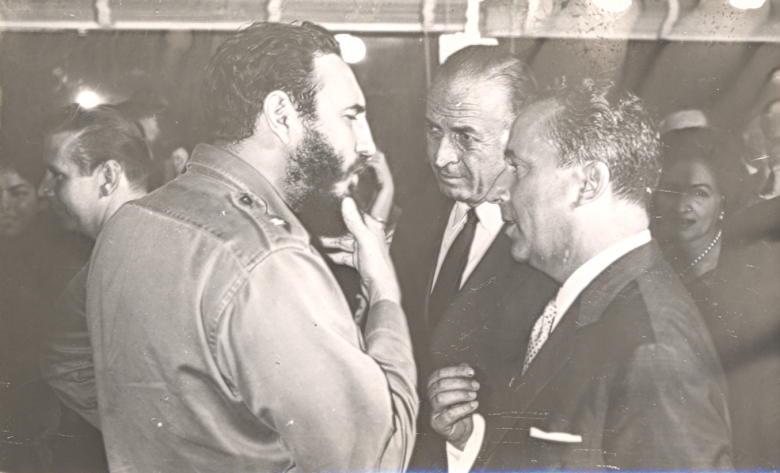
Switzerland's role as a protecting power dates back to the 19th century. During the Franco-Prussian war of 1870–71, Switzerland represented the interests of the Kingdom of Bavaria and the Grand Duchy of Baden in France. Then during the two world wars, "its neutrality allowed it to become the protecting power par excellence and to assume 200 mandates representing 35 countries during the conflict." According to Marc Perrenoud from the FDFA's history unit, this was the period in which Switzerland forged its reputation as a neutral power. "It was during the Second World War that Switzerland assumed the largest number of concurrent mandates in its history. Eminent diplomats such as Walter Stucki, who headed the Swiss diplomatic representation in France at the time, had considerable responsibilities," he continues. For Leu, the Swiss Confederation is an attractive country as a protecting power because of its "neutrality, moderate foreign policy and the absence of any colonial past, which naturally predispose it to fulfil this function as an impartial mediator".
Switzerland's perpetual neutrality was first recognised by the European powers at the Congress of Vienna in 1815. The 'good offices', first mentioned in a Federal Council dispatch in 1870, are one aspect of this neutrality. In addition to safeguarding foreign interests, the founding of the Red Cross and the convening of the 1864 Diplomatic Conference are listed by Alois Riklin in the Historical Dictionary of Switzerland as some of Switzerland's most historic actions in this respect, as they laid the foundations for the Geneva Conventions and international humanitarian law in times of war. "While Switzerland is a neutral country, this does not mean that its foreign policy is passive", says political analyst Daniel Warner.[2] "The fact that Switzerland is neutral allows it to be perceived by both parties as impartial".
The Swiss population is justifiably proud of these mandates since they give recognition to the country’s foreign policy.
- Daniel Warner
Past, present and possible future mandates
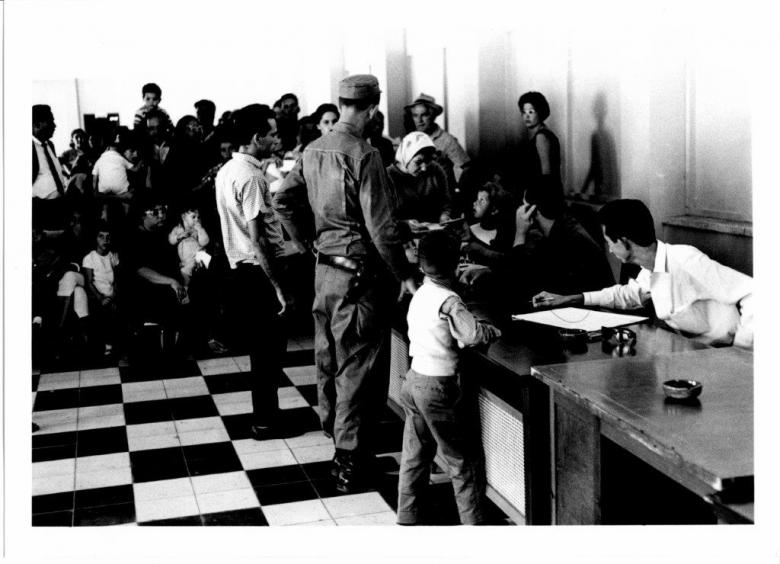
Switzerland has both protected state interests and saved the lives of individuals over the course of its many protecting power mandates. During the Second World War, those who sought to protect the victims of the Nazi regime and its collaborators met with legal and political obstacles, but were nevertheless able to save some of those facing persecution, particularly Jews who held passports from Middle Eastern or Latin American countries. In Hungary, Vice-Consul Carl Lutz distributed letters of protection which saved the lives of thousands of people. Since 1945, Switzerland has held more than 70 protecting power mandates. For Marc Perrenoud, the most impressive of these has been Switzerland's double mandate protecting the interests of the United States in Cuba and vice versa. The Cuba mandate was established in 1961 and ended when the two countries resumed diplomatic relations on 20 July 2015. Switzerland's longest running protecting power mandate, it allowed 260,000 Cubans to travel to the United States thanks to the creation of an air link between Varadero and Miami.
Switzerland currently has six protecting power mandates:
- Representation of Iran's interests in Egypt since 1979
- Representation of United States interests in Iran since 1980
- Representation of Russian interests in Georgia since 2008
- Representation of Georgian interests in Russia since 2009
- Representation of Iran's interests in Saudi Arabia since 2017
- Representation of Saudi Arabian interests in Iran since 2017
Switzerland may soon take on a seventh mandate. In mid-March 2019, the United States government asked the FDFA to assume a protecting power mandate in Venezuela. Federal Councillor Ignazio Cassis and US Ambassador to Switzerland Edward T. McMullen signed an agreement on 5 April 2019 in Bern. Venezuela must now agree for the mandate to apply.
Read more about protecting power mandates:
Switzerland as a protecting power
Swiss diplomacy in action to protect foreign interests
[1]The statements by Livia Leu and Félix Baumann cited in this article were made at the symposium on Swiss Diplomacy in Action held by the Swiss Consulate General in Lyons on 15 December 2011. Source
[2] The statements by Daniel Warner cited in this article were made at the symposium on Swiss Diplomacy in Action held by the Swiss Consulate General in Lyon on 15 December 2011. Source
Cover image: Foreign Interests Section of the Swiss Embassy in Tehran © FDFA